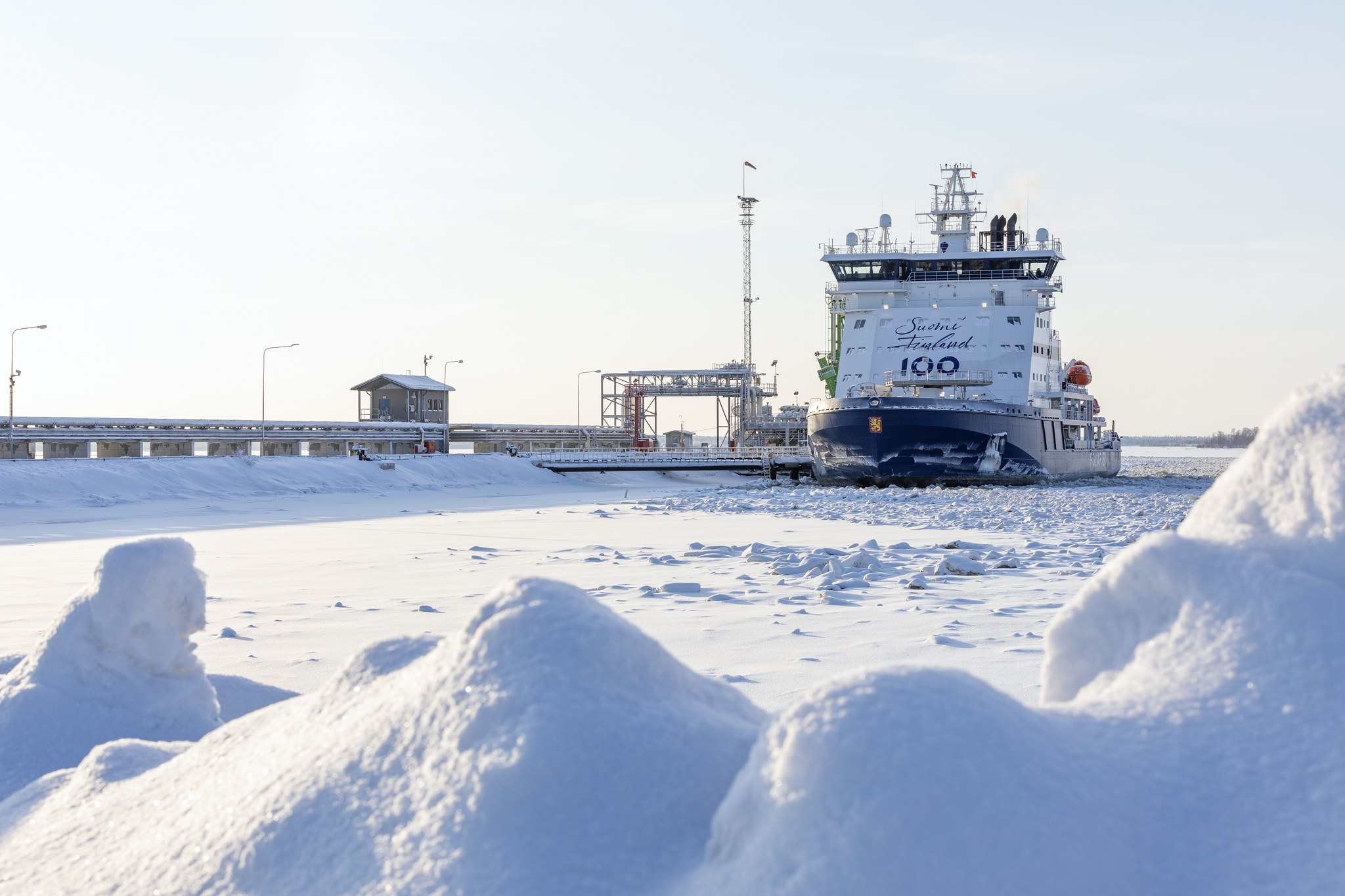
The first WINMOS project began in 2012, laying the foundation for long-term Fenno-Swedish cooperation. Besides extensive reports, the latest Finnish icebreaker, Polaris, was completed during the project. WINMOS II deepened system level review and expanded understanding of the winter maritime operating environment. Currently the third WINMOS project is ongoing, creating further research and development data and renewing equipment.
“Each project has the same objective: to ensure uninterrupted winter maritime transport, secure sufficient equipment and develop icebreaker operating expertise. It is equally important to understand the changing operating environment – this investigation seeks to address gaps in our knowledge,” summarises Head of Unit Helena Orädd from the Finnish Transport Infrastructure Agency.
EU funding boosts development
The total budget for WINMOS III is EUR 60 million. The target level for EU funding was 50%, but the budget for the new construction package was reduced after funding was granted. Finland’s share of the project is EUR 2.8 million, half of which is covered by EU funding. Sweden’s contribution is significantly greater, as the country seeks to construct a new icebreaker during WINMOS III. This aligns the project closer with equipment renewal.
The Finnish Transport Infrastructure Agency coordinates the WINMOS IV project; approval of funding in July granted the Agency EUR 42 million in EU funding for the construction of a new icebreaker. The Swedish Maritime Administration is involved in the project, extending the lifecycle of its fleet. Sweden has budgeted EUR 10 million for the project, of which 50% comes from EU funding.
Maritime Specialist Lauri Kuuliala explains the significance of funding: “EU funding is crucial. Development of this scale would otherwise be impossible, and it would take longer to begin construction.”
IBNet – digital network for winter maritime transport
WINMOS III is built around five substance themes: Construction of the Swedish icebreaker, research and design of the new Finnish icebreaker, development of the IBNet system, expanded expertise, and research and analysis of the operating environment.
IBNet has been made the flagship of the entire cooperation project. The system supports the operation, reporting and coordination of icebreakers. Its public view is available in Baltice.org.
“IBNet is a nerve centre for winter maritime transport. It serves all parties involved in the operations. Reliability and security have been crucial in its development,” states Maritime Specialist Tuomas Taivi.
Development is undergoing, and a new competitive tendering process will be launched after New Year. In recent years, the focus has been on improving data security. At the same time, IBNet has established common practices and facilitated coordination between the authorities and operators.
A key part for WINMOS III is a system-level analysis that assesses the organisation of the merchant fleet, changes in winter conditions and their impacts on winter maritime transport as a whole. This work lays the foundation for the investment plan defined in the Government Programme, future icebreaker procurements and the development of ice class rules.
“While icebreakers are the most visible part of the system, the most impactful decisions result from our understanding of the system as a whole. That is why this work is so important,” Orädd, Kuuliala and Taivi emphasise.
Smoother traffic, less emissions
Environmental issues are one of the key considerations in the project. New equipment and modern technology will significantly reduce fuel consumption and emissions. In addition, the system-level emission calculation has produced new data on how the severity of a given winter affects the emissions and operating profile of a unit.
Experts from the Finnish Transport Infrastructure Agency emphasise that there is no single solution for emission reduction. Understanding is required on how merchant ships, icebreakers, ice conditions and operation interact.
WINMOS III continues until the end of 2027 and will likely be superseded by a new project. Swedish costs eligible for WINMOS IV began accruing as early as the application stage in February, and will continue until 2029. There is a perpetual need for such projects: Winter maritime transport in the Baltic Sea is globally unique, with no direct equivalents.
“The development of winter maritime transport requires persistence. WINMOS projects provide us with tools and data that can be leveraged in developing the system for decades to come,” Helena Orädd states.
Learn more: http://www.winmos.eu/