
Roughly speaking, the planning of transport routes is divided into preliminary studies, general planning, road and railway planning and, ultimately, construction planning before construction. Each planning phase has its purpose. The earliest planning phases are needed to find out the basics: what are the transport needs and problems, whether new infrastructure investments are needed to solve them, or whether there may be other solutions. Impact assessment is also an essential part of the preliminary studies: for example, how would a new transport route affect people’s lives and business operating conditions?
“We want to assess the necessity, implementation possibilities and phasing of transport infrastructure projects as early as possible. Thorough planning is worthwhile. Nearly all major transport infrastructure projects reveal challenges and problems over time and at some stage of their life cycle. It is a good idea to accept and solve such challenges on the planning table rather than at the construction site during the implementation phase,” says Director Jaakko Knuutila.
Planning also helps separate the wheat from the chaff. If a project proves unprofitable or impossible to implement, its journey may end before the more detailed planning phases based on the knowledge base. And even if a project is profitable, differentiation and comparability of projects are important, as not all profitable projects can be promoted to the implementation phase due to limited resources.
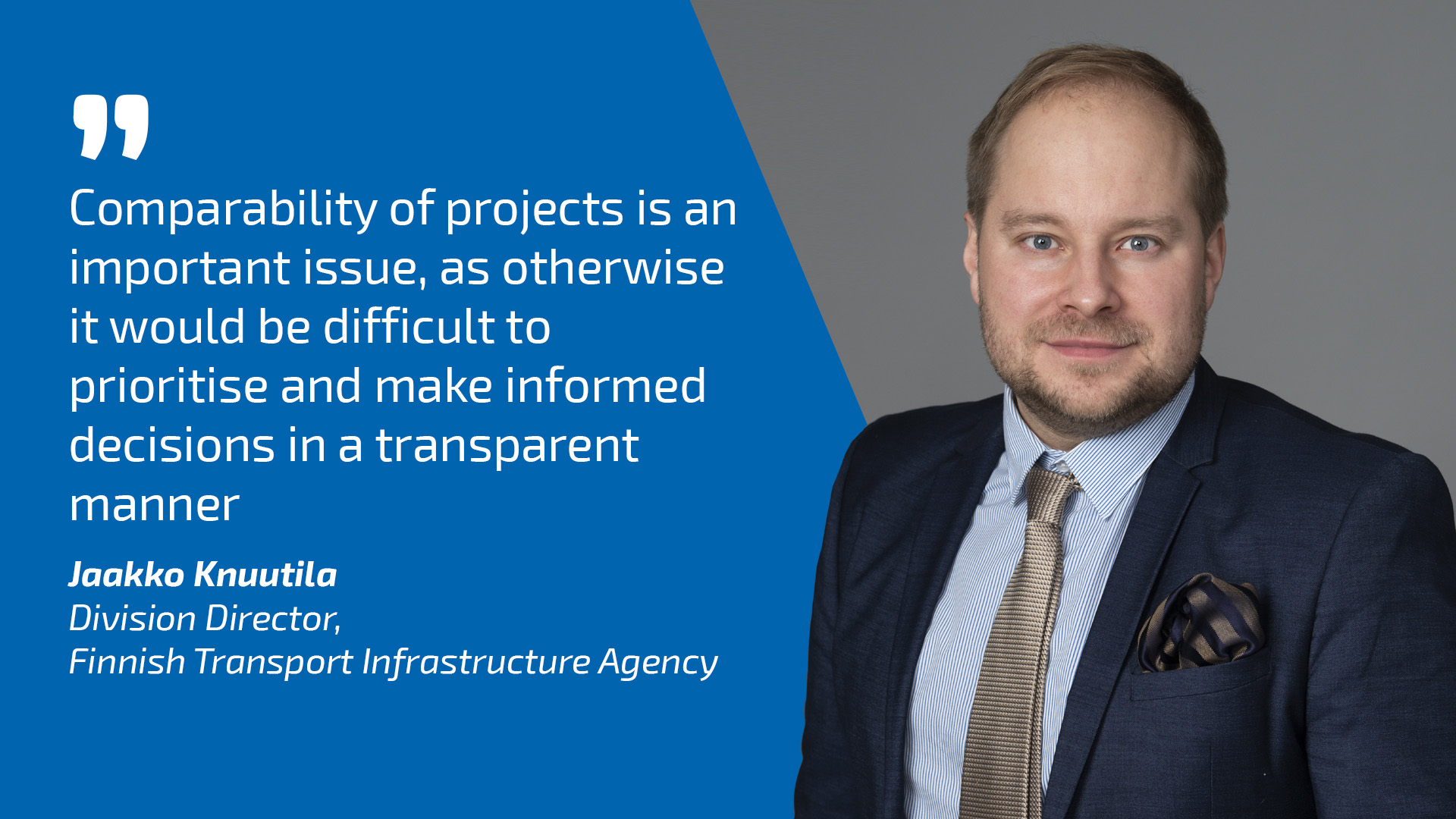
“For example, we assess the benefits, disadvantages and costs of all major projects in the same way. Comparability of projects is an important issue, as otherwise it would be difficult to prioritise and make informed decisions in a transparent manner,” says Knuutila.
Focus on international connections
This year, too, the Finnish Transport Infrastructure Agency has completed many studies. Studies focusing on international connections in Finland, such as the Kvarken Fixed Connection Feasibility Study and the Northern Finland Track Gauge Review, have received public attention.
“Both preliminary studies have provided important knowledge to support public discussion. In Northern Finland, extending the EU track gauge to Finland has now continued, as we are currently planning the so-called Rail Nordica,” says Knuutila.
The planning of Rail Nordica has received EUR 20 million in funding from the Government, including the planning of Tornio–Röyttä and Kemi–Ajos port connections, the planning of the new Tornio and Haaparanda railway bridge, and the planning of a transshipment point.
In addition to international connections, environmental issues have also been emphasised in recent studies. For example, the recent Analysis of the infrastructural means and infrastructure management methods available for the mitigation of climate change compiles information on the methods that the Finnish Transport Infrastructure Agency can use to mitigate climate change. We have previously published a news item on the report: Reducing transport infrastructure emissions calls for a wide range of measures and cooperation.
From preliminary study to implementation
Preliminary studies are not only technical documents, but they play an important role in the life cycle of future transport routes and in producing knowledge for decision-making on the next phases. For example, in the preliminary study of the Karelian Railway, several profitable projects were found, some of which are already under construction, and some are undergoing more detailed planning.
“The railway project between Luumäki and Imatra has already been completed in many respects, and the planning of the Imatra–Joensuu line has progressed well. These are concrete examples of projects in which pre-planning helped to find not only challenges but also opportunities and a knowledge-based path for promoting projects,” says Knuutila.