
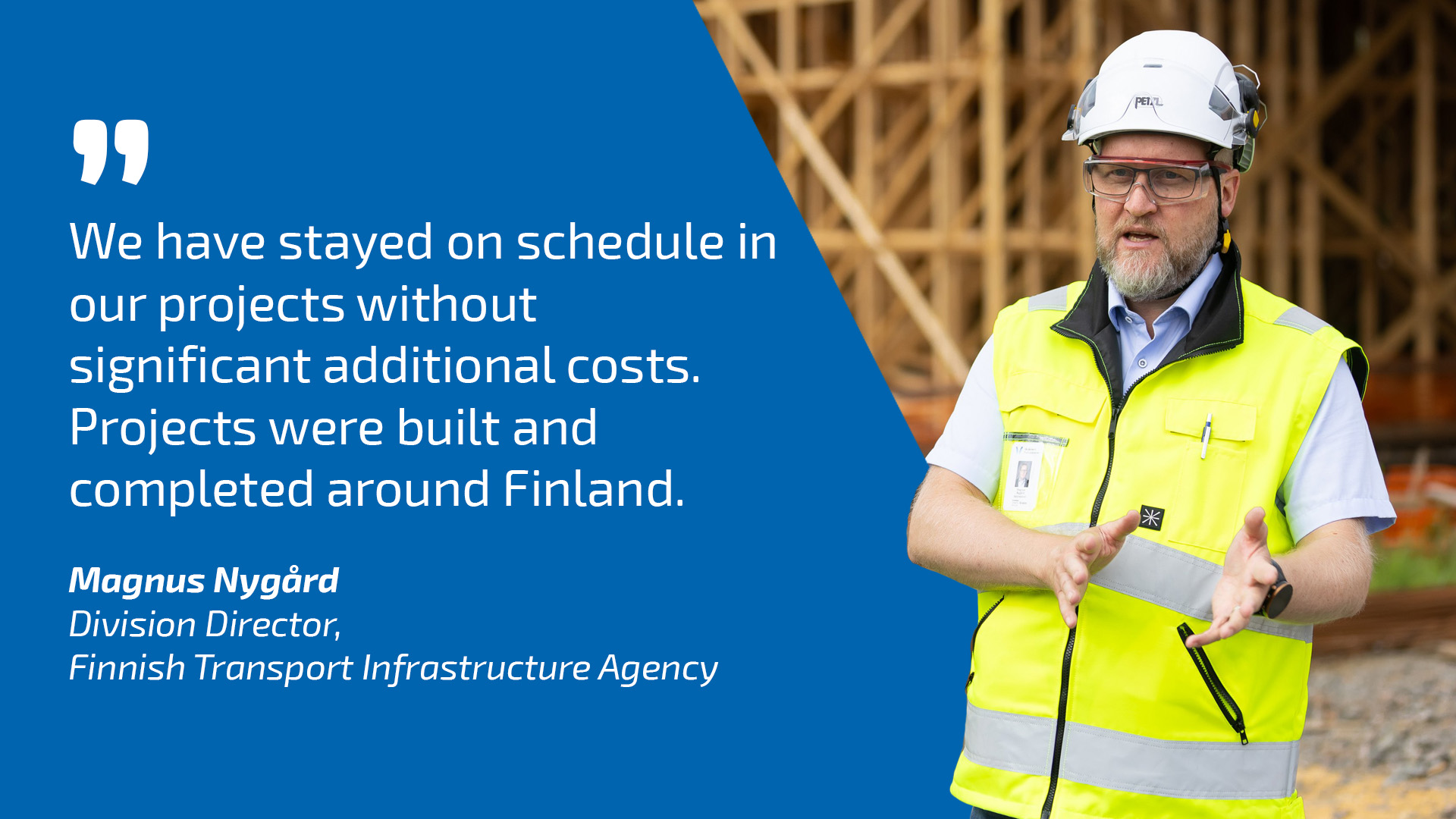
According to Director Magnus Nygård, 2025 has been a very successful year from the perspective of transport infrastructure construction.
“We have stayed on schedule in our projects without significant additional costs. Projects were built and completed around Finland. This year, we also succeeded very well in minimising the impacts on traffic during construction. For example, on the main line, the work of the Helsinki–Riihimäki project was perfectly coordinated with traffic,” says Nygård.
The completed projects now also better meet the needs of business life, increase cost-efficiency and reduce emissions.
In Lapland, construction took place during a short summer – safety improved on Main Road 21
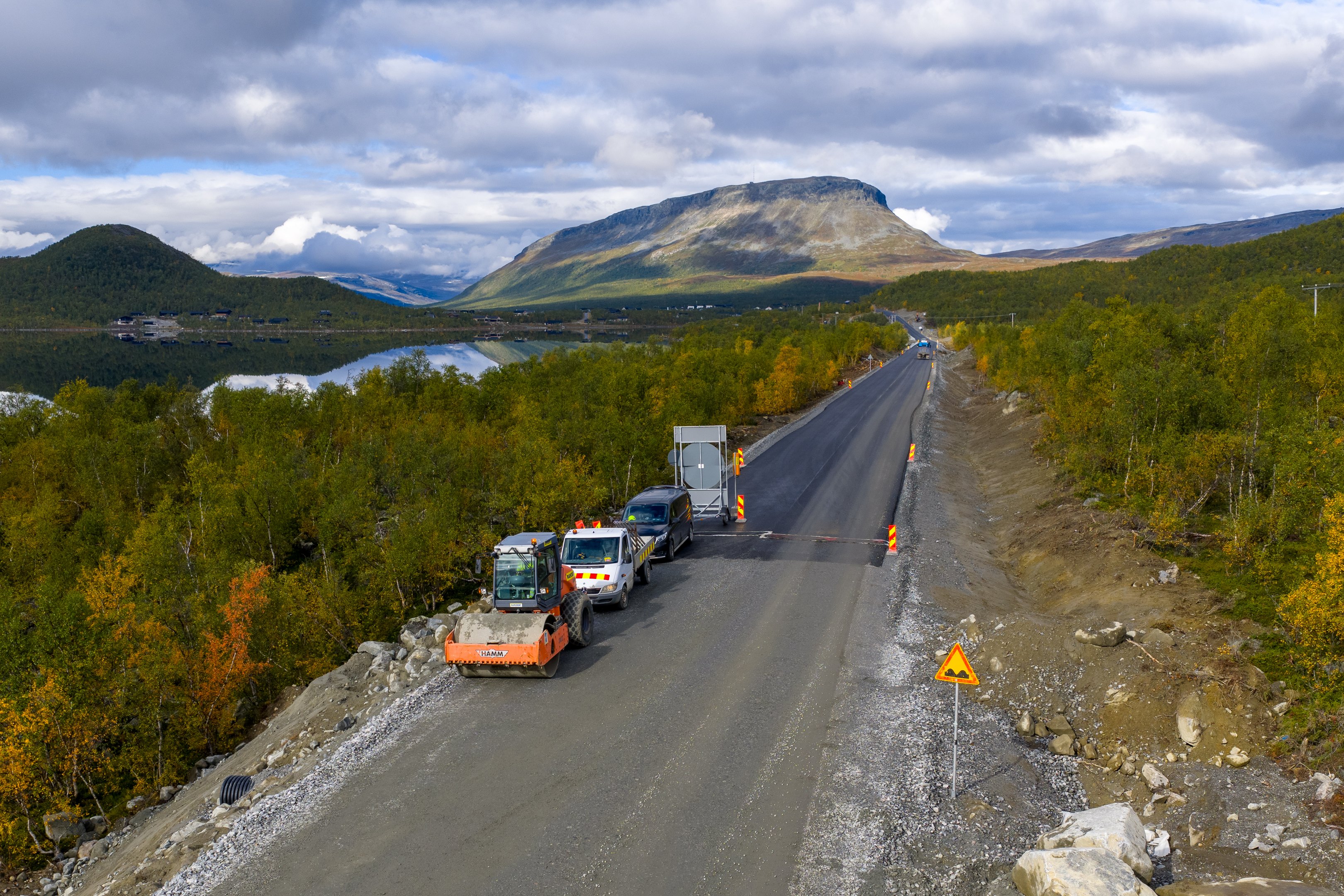
In Enontekiö, Northern Finland, work was carried out for safer traffic, as Main Road 21 was improved between Ailakkalahti and Kilpisjärvi.
“Infrastructure construction in Lapland is the same basic construction as elsewhere, but the harsh winter and the short summer season challenge the builders. The soil is often frozen until July, and in the autumn the soil freezes early in October. All summer work must be completed during the short frost-free season,” says Project Manager Keijo Heikkilä.
Despite the tight deadline, the construction work of the project was successfully completed. As a result, the main road now meets the requirements set for the main route for a distance of approximately 4.2 kilometres. It is now eight metres wide and has better geometry.
“Main Road 21, improved in the project, is a significant part of Finland’s security of supply. Similarly, the road section contributes to supporting military mobility in the northern region,” emphasises Heikkilä.
At the southern tip, the railway was electrified and level crossing safety improved
The project for the electrification of the Hyvinkää–Hanko line and the improvement of level crossings was completed at the southern tip of Finland, the aim of which was to increase cost-efficiency, reduce emissions and improve safety.
The project created an electrification solution in the implementation of the Tammisaari rail swing bridge, which is the first of its kind.
"The swing bridge was equipped with a fixed conductor that rotates with the bridge and is de-energised for the rotating part. The site has been operating for nearly a couple of years, and it has worked well,” says Project Manager Harri Sakki.
A large number of hazard trees have been removed during the project, which is essential for railway safety. The removal of trees will continue at least next year.
In the southwest, the only road connection to the archipelago was secured
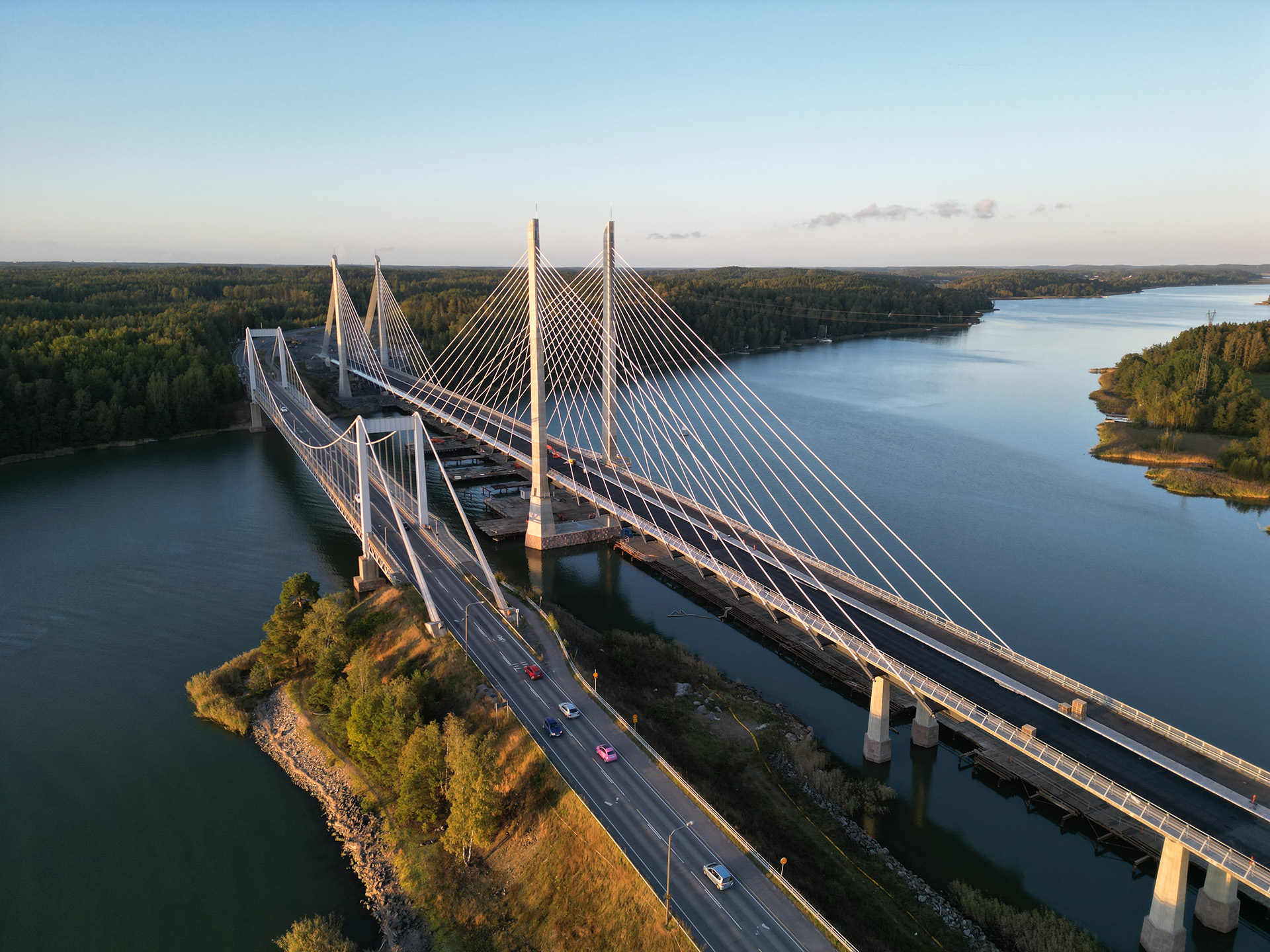
In Pargas, Southwest Finland, the impressive Kirjalansalmi bridge was completed at the end of the year. A year earlier, the Hessundinsalmi bridge was also built in the project. The completed bridges are located on Saaristotie (Road 180), which is the only road connection to Pargas and the Turku Archipelago, which makes the project essential also for security of supply.
According to Project Manager Saramaria Cowell, the bridges were now built to last for the next hundred years.
“The new bridges have been built to serve road users for at least the next hundred years. The project will also make it possible to introduce larger transports at the bridges. In addition, the project improved traffic safety through junction arrangements and the construction of a wider walking and cycling route,” says Cowell.
The project challenged its team to develop something new. Construction, such as the concrete joints of the Hessundinsalmi bridge, used bridge structures that have not previously been seen on the Finnish scale. Cable-stayed bridges such as the Kirjalansalmi bridge are also fairly rare in Finland.
According to Cowell, the alliance project awarded as Project of the Year has taught its team a lot.
“The project has provided plenty of opportunities for innovation and the development of new practices. I will personally make use of these lessons in future projects,” promises Cowell.
In the west, the accessibility of the port was improved and the usability of the transport network enhanced
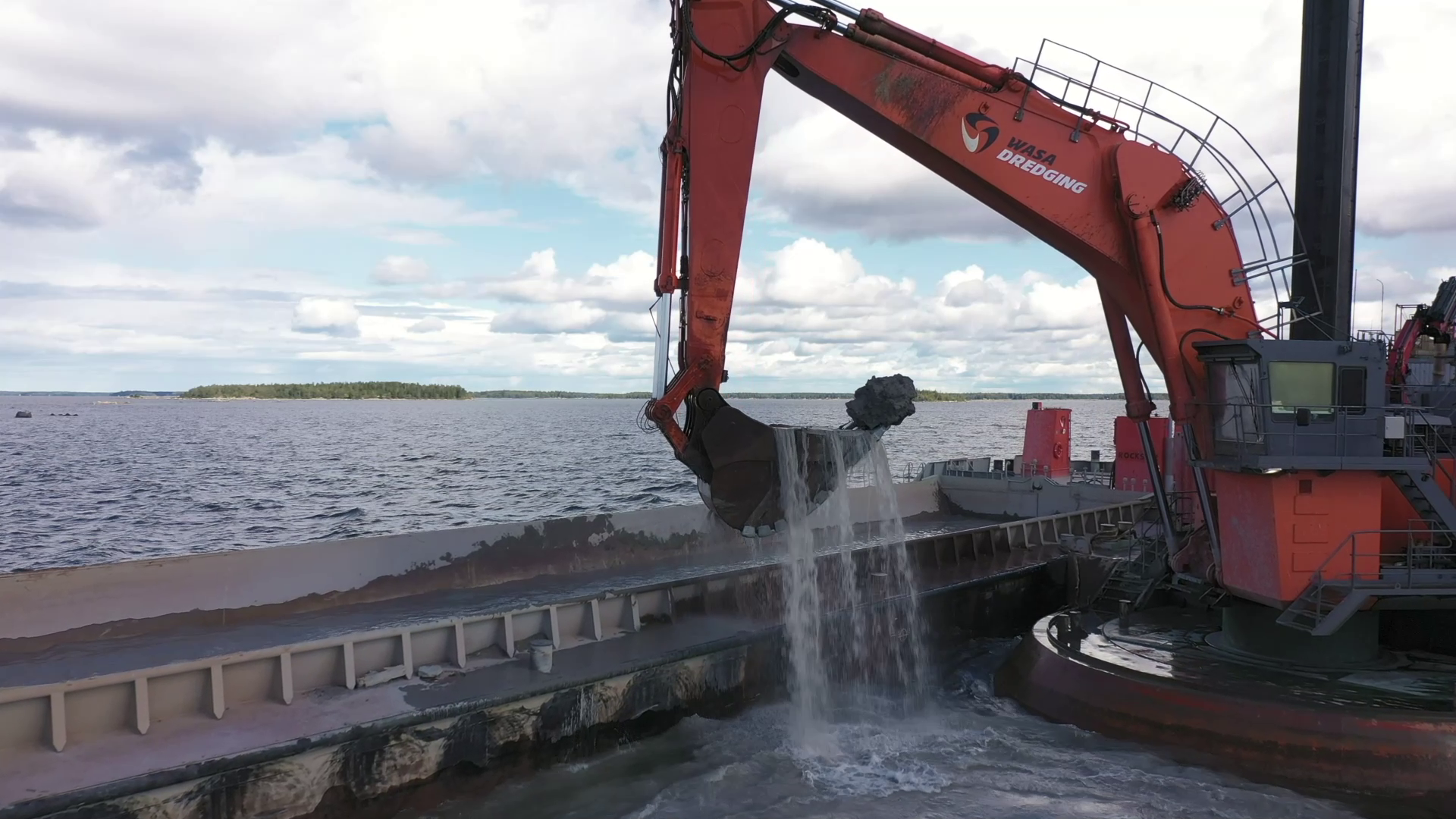
In addition to road and railway projects, work was also carried out on waterways. The widening of the Vaasa fairway and port project, completed in the autumn, will improve the accessibility of the port and enable uninterrupted sea transport. In addition, the wider fairway better meets the needs of business life.
"The fairway now enables wider vessels to arrive at Vaasa port safely. Wider vessels bring larger cargo loads, which reduces transport costs and environmental loads. They also open up new transport opportunities for the port and its users,” explains Project Manager Pasi Kivioja.
According to Kivioja, smooth cooperation was at the core of the project’s success. The project was completed faster than expected.
“Cooperation worked both within the project and with the stakeholders, and there were no obstacles to the progress of the work. The procurements were made well in advance, the expertise was strong and the equipment in use was of high quality. Dredgers and support vessels were in efficient use, and dredging continued without interruption throughout the contract,” Kivioja summarises.
In the east, road safety was improved and military mobility strengthened
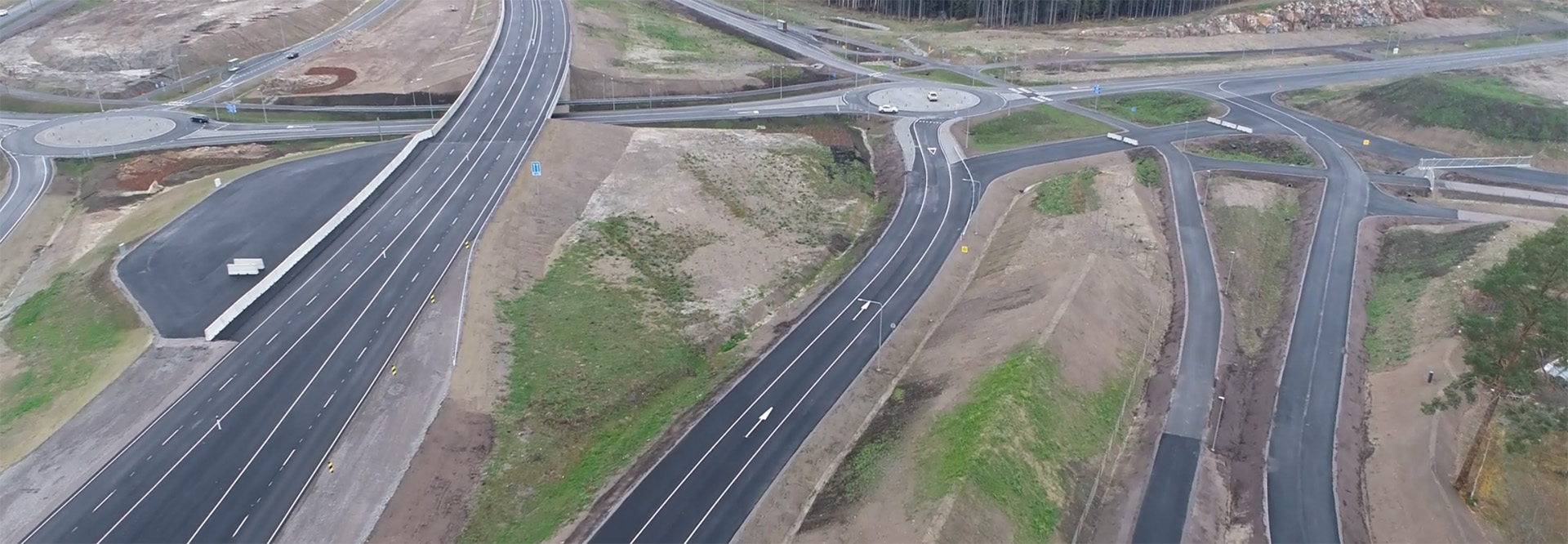
In Siilinjärvi, traffic on the nationally significant Main Road 9 was streamlined in the Lotteinen-Jännevirta project, in which the road was widened to four lanes over a stretch of approximately four kilometres. In addition, a new grade-separated interchange and emergency landing place were implemented, pedestrian and cycling routes were improved and private road arrangements were made.
“The work was successful both technically and in terms of quality, and the schedules were met,” says Project Manager Harri Liikanen.
According to Liikanen, traffic safety in the area has improved considerably, as the congested at-grade intersections at Kuopio Airport and Rissala Business Village have been replaced by a grade-separated interchange.
The project also strengthens the military mobility of the region. To this end, the European Union granted CEF support for the construction of the project.
“In the project, we built an emergency landing place for aircraft and the associated support areas, as well as a route to the Karelia Air Wing. The solution serves both ordinary road traffic and the needs of the Finnish Defence Forces,” explains Liikanen.
Good volume and long-term outlook in the development of transport infrastructure
The construction of the transport infrastructure will continue in 2026, and the Finnish Transport Infrastructure Agency currently has nearly 60 projects underway across different types of transport routes.
“The future looks good with regard to infrastructure construction, as decisions on new projects amount to approximately EUR 1.8 billion. The growing volume of projects means work for contractors, designers and developers. The Finnish Transport Infrastructure Agency’s project managers and engineers also have their hands full. Together, we can ensure high-quality construction in accordance with the agreement, develop the infrastructure sector and improve productivity,” summarises Nygård.
Projects completed in 2025
- Main Road 5 development of Hurus–Hietanen road section
- Main Road 6 at Koria, Kouvola
- Main Road 9 Lotteinen-Jännevirta
- Main Road 21 Ailakkalahti–Kilpisjärvi, Enontekiö
- Road 180 Renovation of bridges in Kirjalansalmi and Hessundinsalmi, Pargas
- Electrification of the Hyvinkää–Hanko line and improvement of level crossings
- Kouvola–Kotka/Hamina railway project
- Kupittaa–Turku railway project
- Nokia railway yard
- Improvement of Tampere–Jyväskylä rail section, phase 1
- Kitee roundwood loading site
- Jyväskylä–Äänekoski renovation
- Seinäjoki railway station area, construction project
- Widening of the Vaasa fairway and port