
1. Evolving business needs
Interviews and reviews with the business sector have mapped future transport needs and forecasts on e.g. ship size, raw material procurements and goods flow. Military mobility has been of great interest recently, and it is secured as part of regular winter maritime transport.
“Forecasts suggest that, due to circular economy, alternative fuels and other factors, future goods flows might include smaller streams that increase demand for smaller vessels as well. Preparations are made to meet evolving business needs. Although icebreakers are designed for a 50-year service life, close cooperation with Sweden improves the flexibility of the icebreaker fleet. The need and service level for icebreaking are considered as a unit. Additionally, the prerequisites for joint procurements are reviewed, for instance, by comparing the national procurement legislation among different nations.”
2. Evolving assistance for the merchant fleet
Emissions reduction targets affect the ability of the merchant fleet to navigate in ice. Engine power relative to vessel size is decreasing, and ever fewer vessels are built to the highest ice class. For winter maritime transport, this trend means that vessels are losing their ability to independently operate in ice.
“Vessel assistance needs are evolving. The need for icebreakers to tow individual vessels will increase compared to the historical practice of escorting convoys. This requires a more versatile icebreaker fleet that includes smaller icebreakers for early winter and more robust ones for harsh midwinter conditions. In addition, the Finnish-Swedish ice classification system is assessed in cooperation with Traficom. The current ice classification system has been in use for ages, but current changes in the merchant fleet requires reassessment.”
3. Evolving ice conditions and coastal wind farms change ice movements
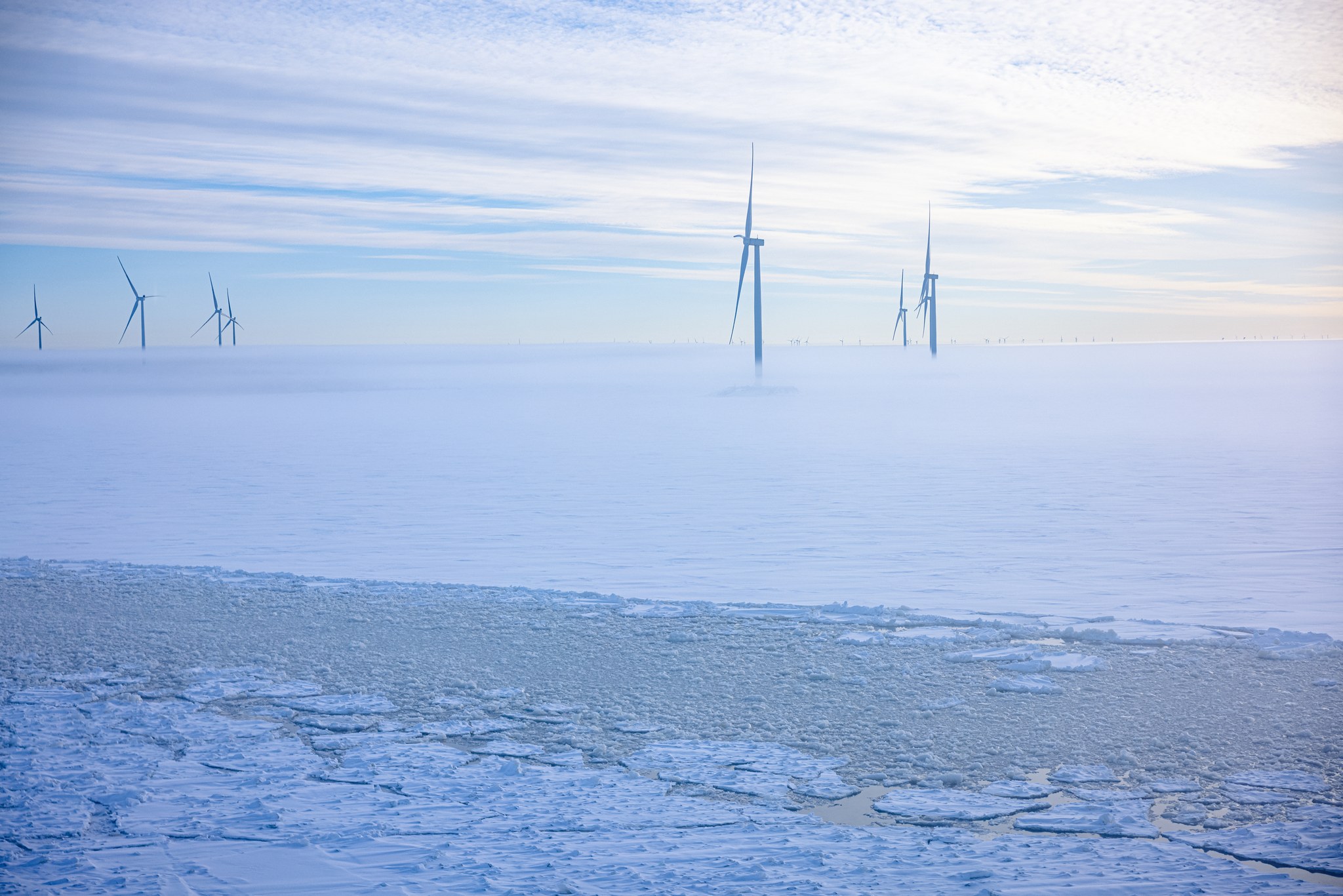
Icy winters are changing. Even during temperate winters winds can pack ice into ridges and slush walls – typically along the Finnish coast due to the prevailing winds. However, Finnish winters have been highly variable in the past, and both temperate and harsh ice conditions can be expected in the future as well. In addition, changes include coastal wind farms that will influence ice movements.
“We are simulating the impact of wind farms on ice dynamics in cooperation with VTT, the Finnish Meteorological Institute and Aalto University. We currently lack definite data on this phenomenon, and there are no precedents elsewhere either. On the other hand, Finland has extensive experience in modelling ice conditions, and we can use existing research data to prepare for this new development.”